Guide
The GTA 6 Spec Ad
Three surgeons play GTA 6 in the middle of an operation, win the mission and lose the patient. Every shot is AI, from the cast to the gameplay on the screen. A spec ad, not affiliated with Rockstar Games.
- One photo of youA clear, front-on face
- Game screenshotsReal frames for the render look
- Seedance 2.5 + Kling 4.0Every shot, then the screen
- About 8 hoursFrom sheets to the final cut
Made with GPT Image 2.6, Seedance 2.5 and Kling 4.0 · about 8 hours · As seen on @edmund.tian
The recipe
01
Create your characters and locations
Before any video, make one sheet per person and one picture per location. I made four people (me as the surgeon, me in the game, two assistant surgeons), the real operating room and five game locations. Every video prompt after this points at these images.
10 images · scroll →
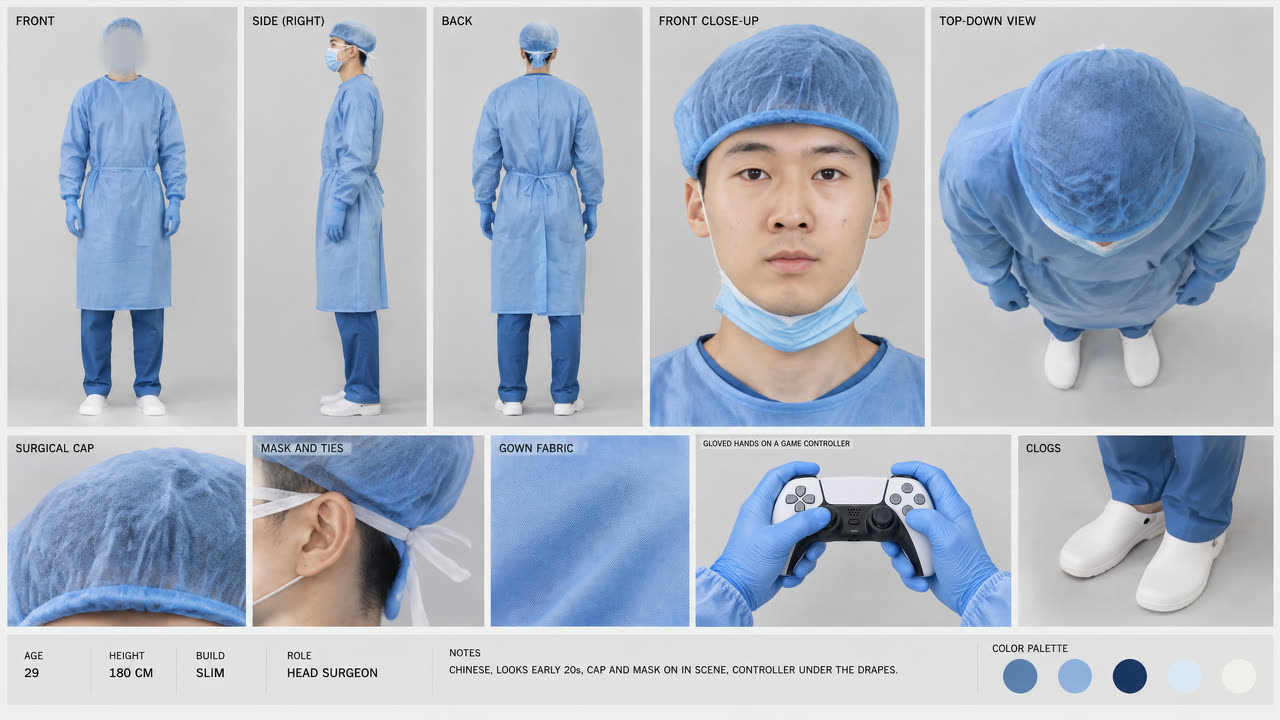
Me, the surgeon 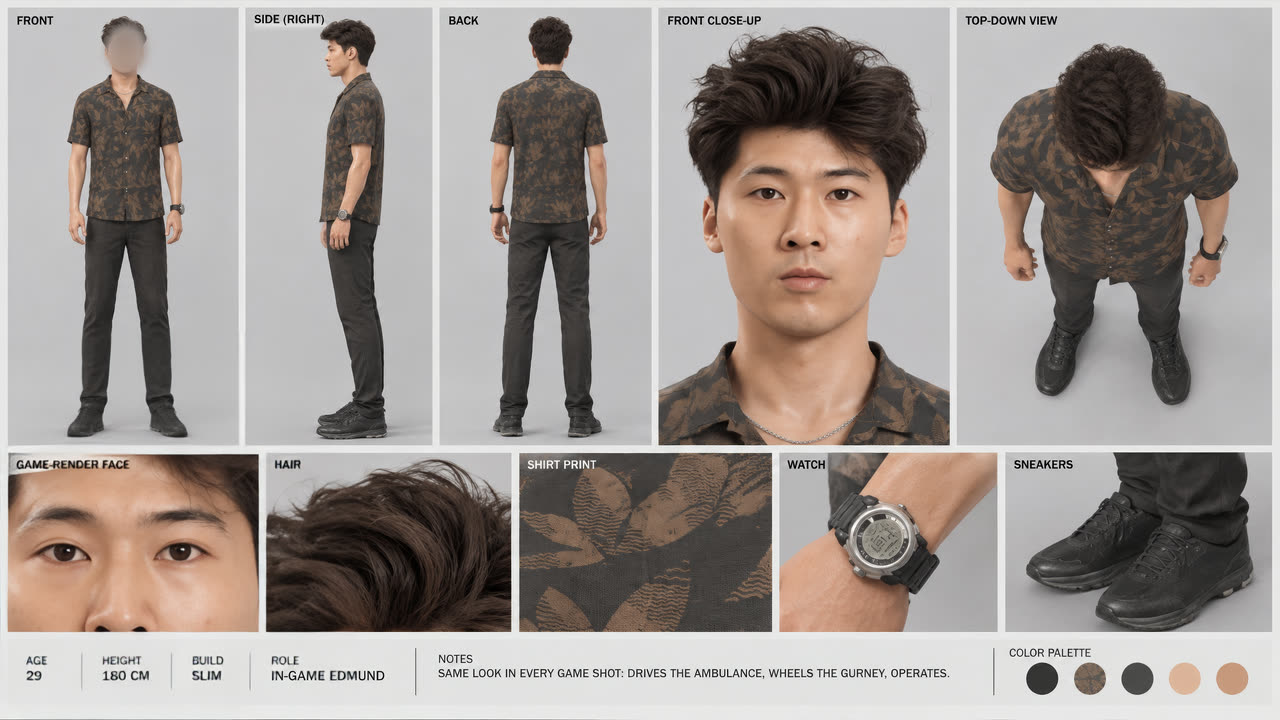
Me, in the game 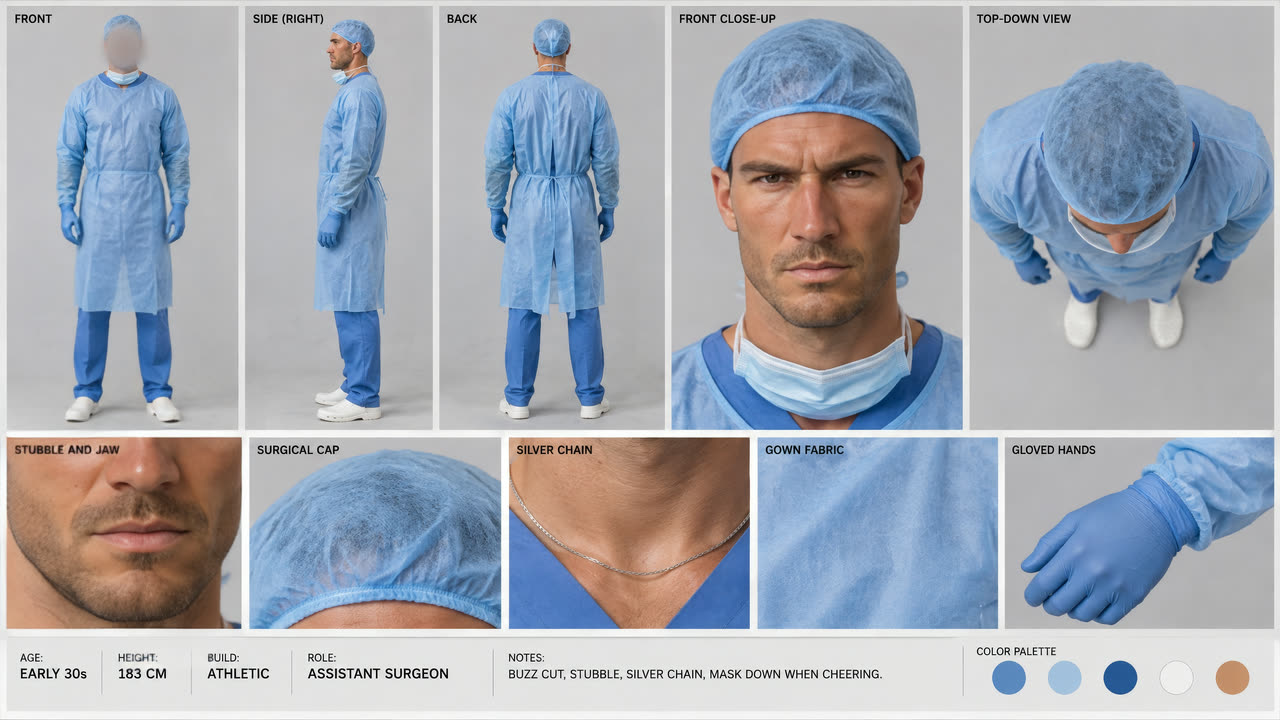
Assistant surgeon 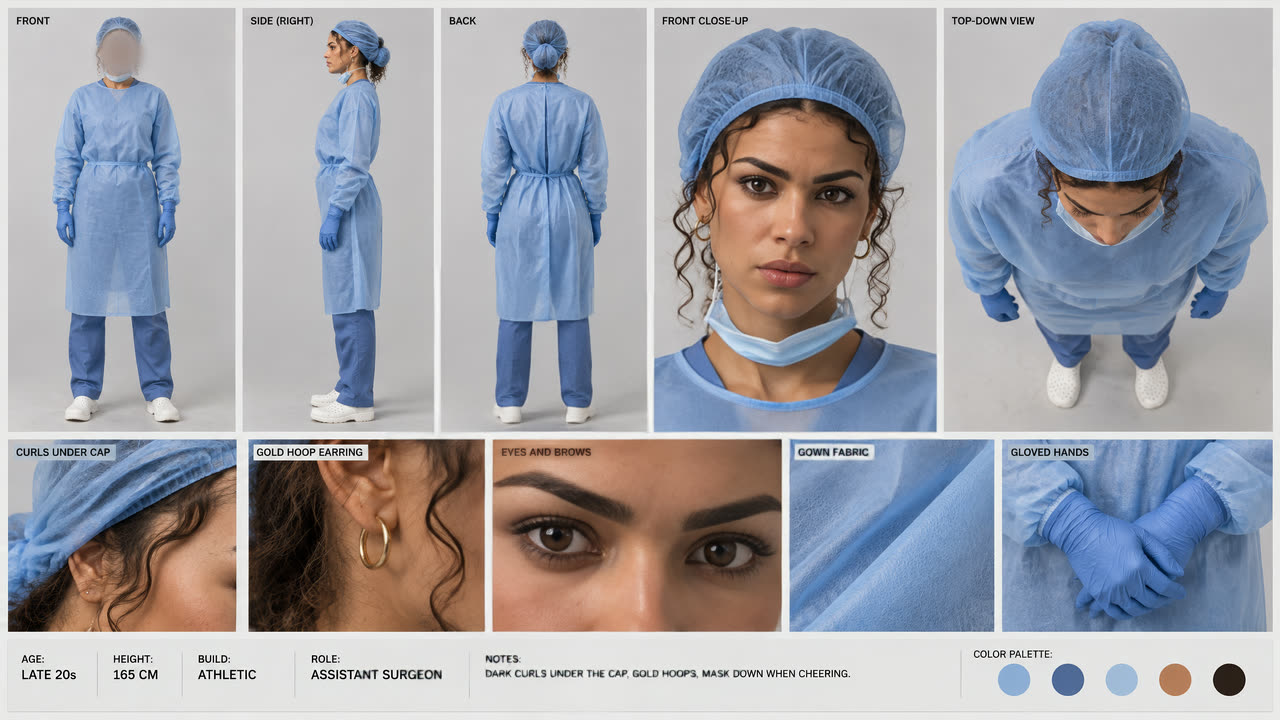
Assistant surgeon 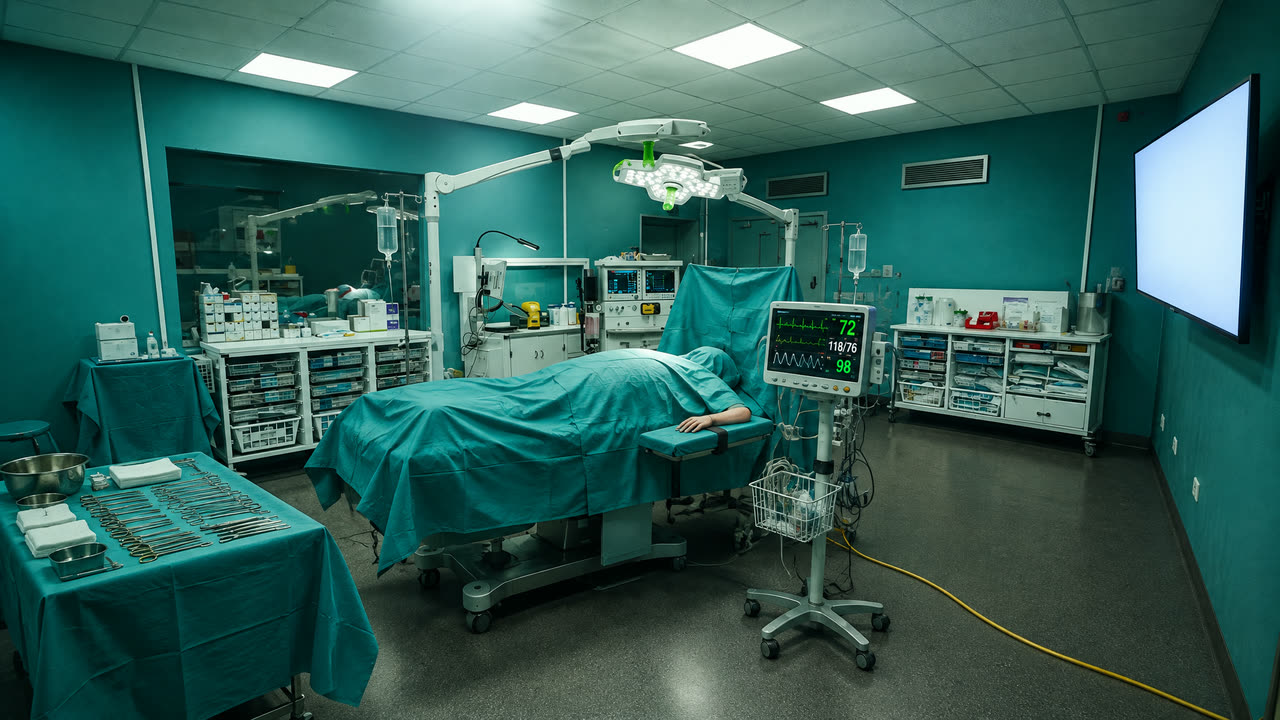
The real operating room 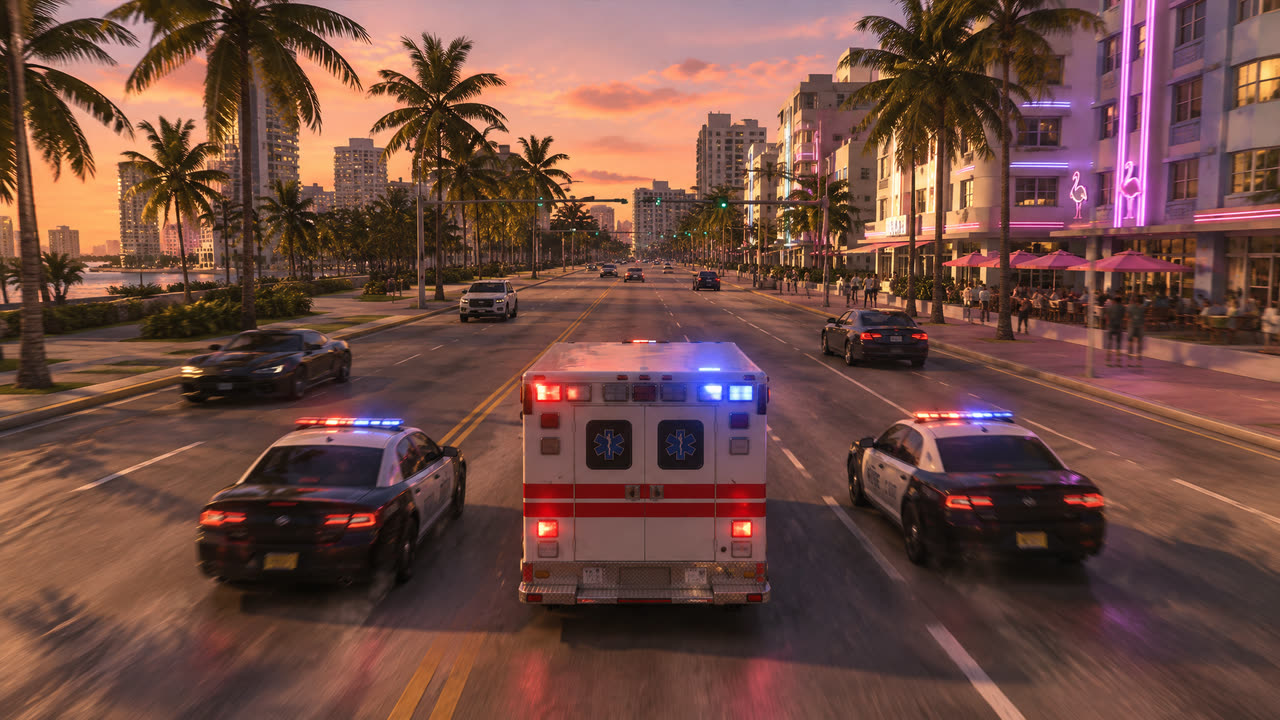
Game: the chase 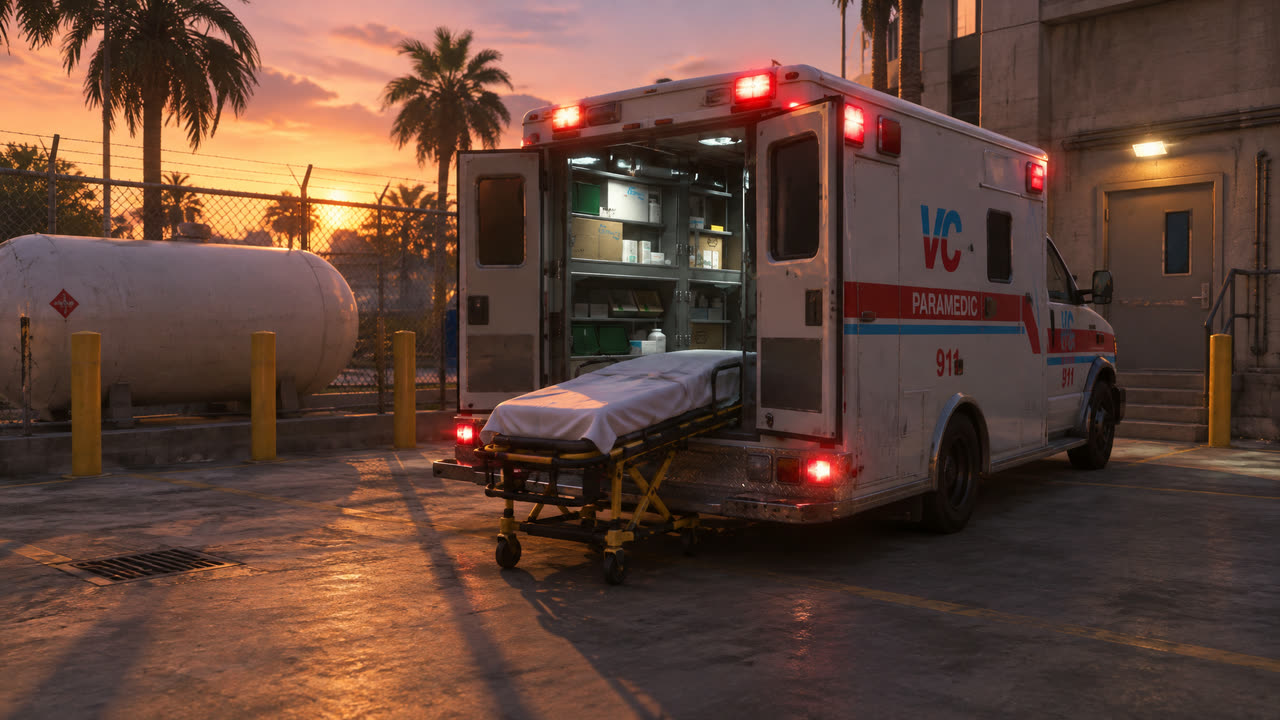
Game: the ambulance bay 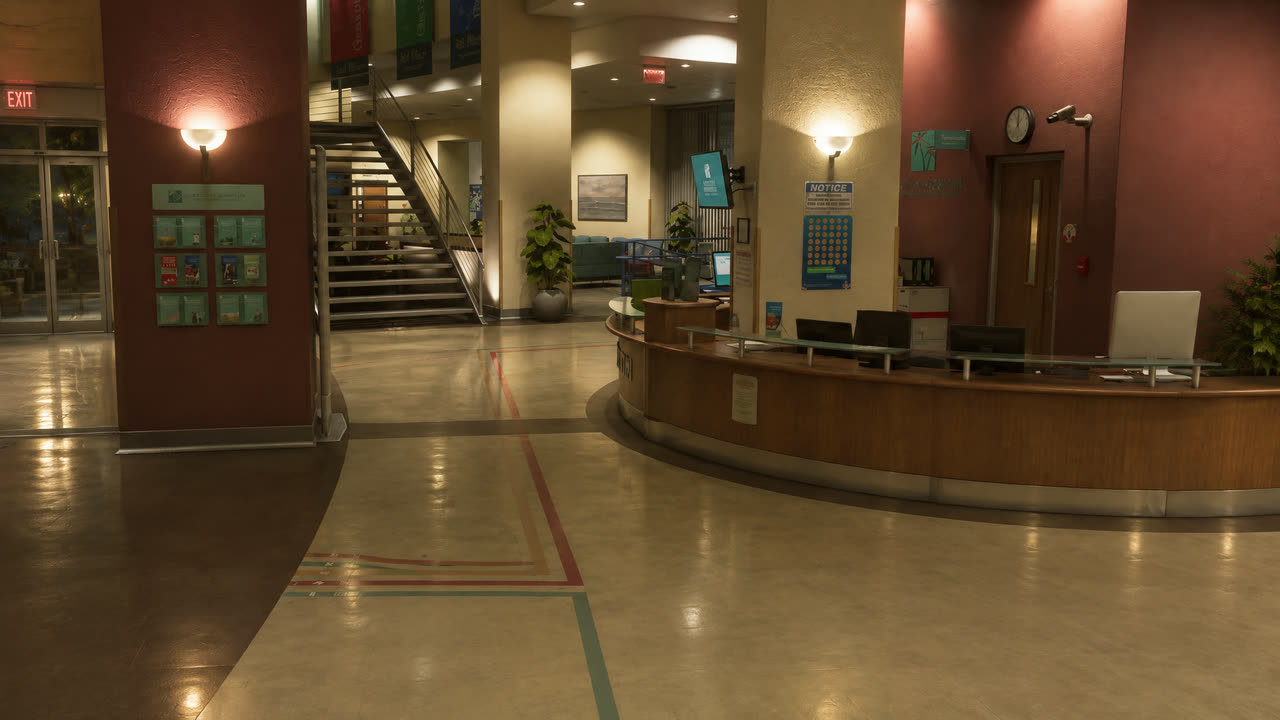
Game: the lobby 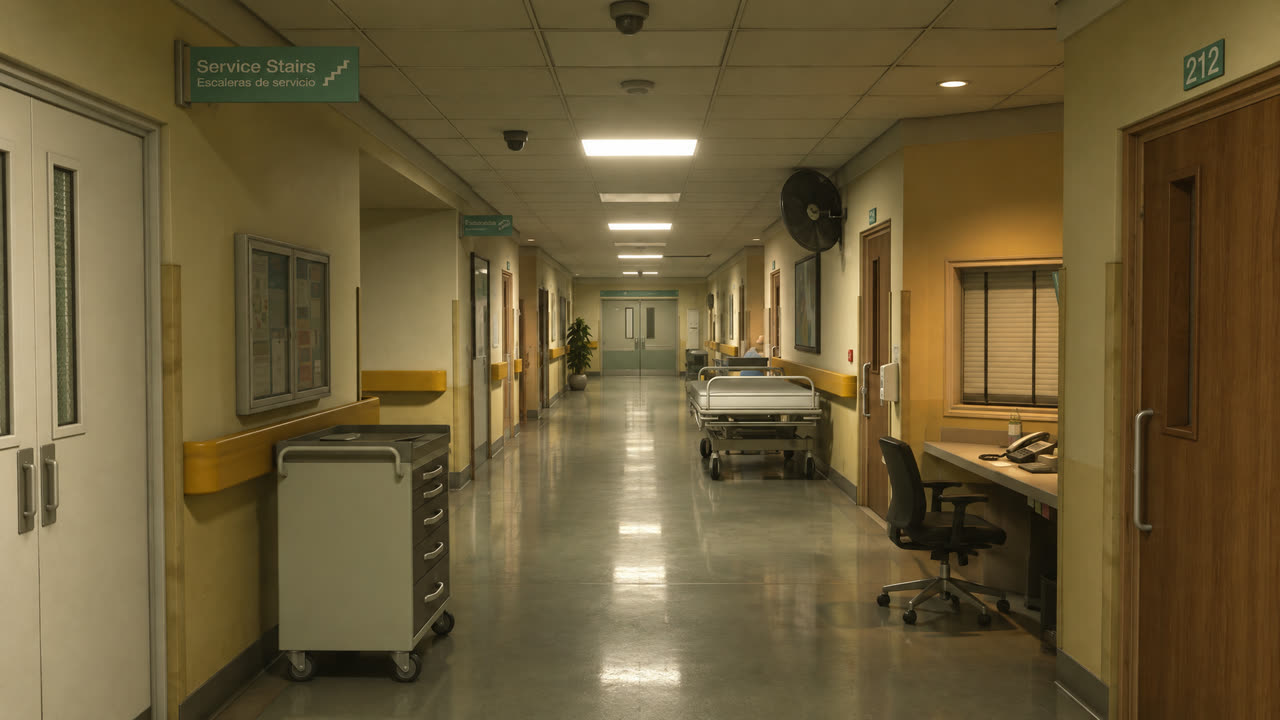
Game: the corridor 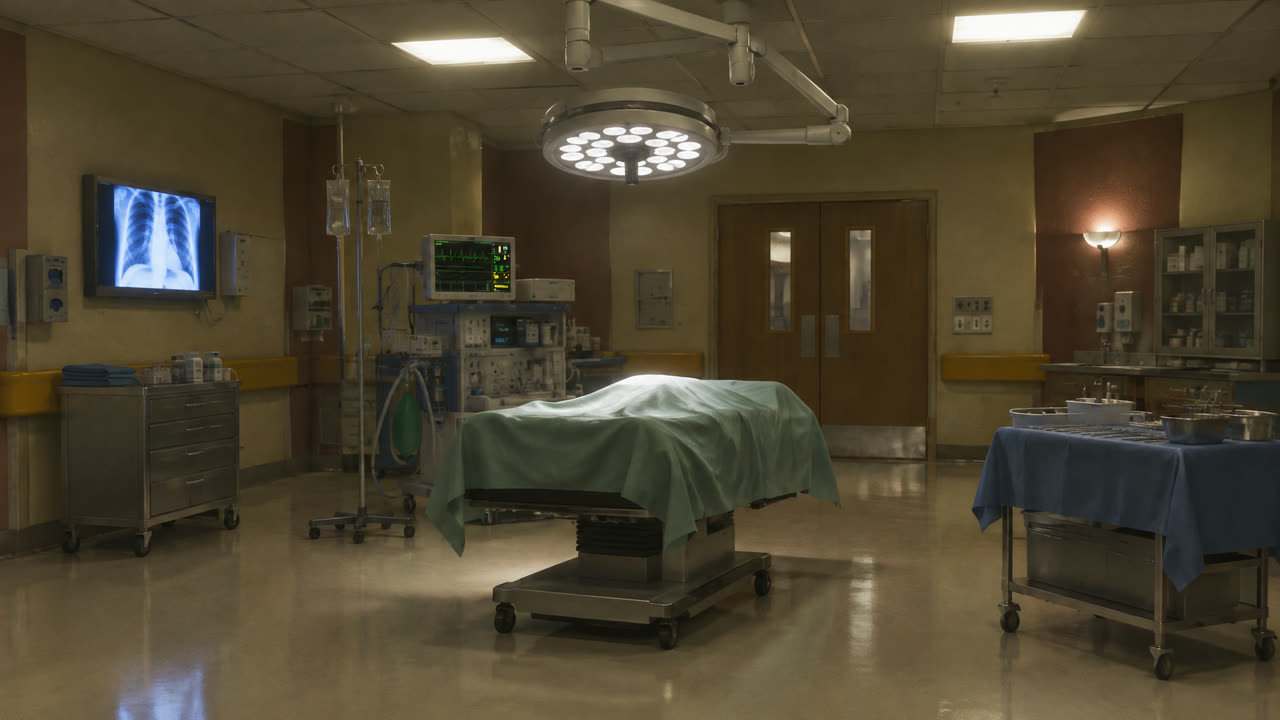
Game: the operating room Your character sheetPhotoreal character reference sheet of the real man in reference image 2, dressed as a surgeon. Reference image 1 is a LAYOUT TEMPLATE ONLY: copy its panel grid, label style and info bar, not its person, clothes or props. Remove the cm height ruler on the right edge; panels run to the right margin. Top row panels labelled exactly: FRONT, SIDE (RIGHT), BACK, FRONT CLOSE-UP, TOP-DOWN VIEW. Plain light grey studio background, soft even studio light, neutral relaxed expression, natural human proportions. It must be him, recognisable to his friends, not a lookalike: copy his face exactly from reference image 2, his only photo: a Chinese man, 29 years old but looking much younger, early-to-mid twenties; slim oval face with a narrow defined jaw and pointed chin; straight dark brows; narrow almond-shaped eyes with single eyelids; a straight slim nose; small mouth with full lower lip; fair skin with a warm undertone; thick dark brown wavy hair with volume, pushed up and back (tucked under the cap in scene). Height 5'11" (180 cm), slim build, natural head-to-body proportion. Outfit in every full-body panel: ceil-blue hospital scrubs top and trousers, a long-sleeved light blue disposable surgical gown tied at the back, a blue bouffant surgical cap, white non-slip clogs, blue nitrile surgical gloves, a pleated blue surgical mask worn over nose and mouth. In the FRONT CLOSE-UP the mask is pulled down under his chin so his whole face shows, the cap still on. Bottom row detail macros labelled exactly: SURGICAL CAP, MASK AND TIES, GOWN FABRIC, GLOVED HANDS ON A GAME CONTROLLER, CLOGS. Info bar fields exactly: AGE: 29 · HEIGHT: 180 CM · BUILD: SLIM · ROLE: HEAD SURGEON · NOTES: CHINESE, LOOKS EARLY 20s, CAP AND MASK ON IN SCENE, CONTROLLER UNDER THE DRAPES. Color palette: five swatches of the outfit colors.
You as the game characterCharacter reference sheet of the man in reference image 2 as a playable character in the same video game as reference images 3 and 4. NOT a photograph: rendered in exactly the game-engine look of images 3 and 4, a next-generation console game render with ray-traced light, slightly glossy real-time skin shading, game-asset hair and cloth, the subtle digital sheen of in-game characters. Reference image 1 is a LAYOUT TEMPLATE ONLY: copy its panel grid, label style and info bar, not its person, clothes or props. Remove the cm height ruler on the right edge; panels run to the right margin. Top row panels labelled exactly: FRONT, SIDE (RIGHT), BACK, FRONT CLOSE-UP, TOP-DOWN VIEW. Plain light grey studio background, soft even studio light, neutral relaxed expression. It must be him, recognisable to his friends: copy his face exactly from reference image 2, his only photo: a Chinese man, 29 years old but looking much younger, early-to-mid twenties; slim oval face with a narrow defined jaw and pointed chin; straight dark brows; narrow almond-shaped eyes with single eyelids; a straight slim nose; small mouth with full lower lip; fair skin with a warm undertone; thick dark brown wavy hair with volume, pushed up and back. Height 5'11" (180 cm), slim build, natural head-to-body proportion. Outfit in every panel, copied from the man in references 3 and 4: a dark charcoal short-sleeve button-up camp-collar shirt with a tan leaf print, worn open at the collar and untucked; a thin silver chain at the collarbone; a chunky black sports watch with a silver dial on the left wrist; dark charcoal slim trousers; plain dark sneakers. No scrubs, no surgical cap, no mask, no gloves. Do not copy the man's face from images 3 and 4, only his clothes and the render style. Bottom row detail macros labelled exactly: GAME-RENDER FACE, HAIR, SHIRT PRINT, WATCH, SNEAKERS. Info bar fields exactly: AGE: 29 · HEIGHT: 180 CM · BUILD: SLIM · ROLE: IN-GAME EDMUND · NOTES: SAME LOOK IN EVERY GAME SHOT: DRIVES THE AMBULANCE, WHEELS THE GURNEY, OPERATES. Color palette: five swatches of the outfit and skin colors.
The roomHorizontal 16:9 photograph. Reference image 1 is for PHOTOGRAPHIC STYLE ONLY: copy its look exactly: an ultra-wide 16mm lens from a high corner, cinematic documentary flash-lit realism, saturated teal-green walls, a white drop ceiling with square LED panels, cool slightly green colour cast, deep shadows under equipment, rich clutter of real hospital equipment, white storage carts with wire baskets, a boom-mounted surgical light, an anesthesia machine with monitors, a yellow cable across the grey floor. Do NOT copy its people, blood or the bodies on the floor: this room is clean, no blood, no people. Same style, a different room with this exact layout, seen from a high corner: 1) Centre of frame: the operating table, its long axis running left to right across the frame, a patient lying on it completely covered under teal surgical drapes, only the body's shape visible, the head end on the right hidden behind a raised teal drape screen, one pale hand resting on an arm board. A boom surgical light hangs over the middle of the table. 2) At the head end of the table, on the side nearest the camera: a patient vitals monitor on a rolling pole at standing eye height, its screen facing the camera, bright green ECG trace and numbers. 3) Beyond the head end, in the right rear corner of the room: a clear open patch of floor, empty now, where three surgeons will stand side by side. 4) On the right-hand wall close to the camera, angled toward that rear corner: a large 65-inch flat TV mounted at head height, its screen glowing plain bright white. 5) Around the walls: white storage carts, the anesthesia machine at the head end, IV poles, an instrument table with steel instruments on a teal drape. Horizontal 16:9 frame that will be cropped to 4:3 for posting: keep every important subject inside the central 4:3 area (the middle 75% of the width); the outer left and right edges hold only expendable background.
Use one photo of your face, cropped tight. With several photos, or a small face in a wide shot, I got a lookalike.
02
Plan the opening shot in 3D, then generate it
My hook is one continuous move: the patient, the heart monitor, around the TV, then the three of us playing. I laid it out in Blender with grey shapes and gave that clip to Seedance 2.5 as @Video1, with the room and the sheets as images. The prompt tells it to copy only the camera move.
@Video1: the Blender layout What Seedance 2.5 made of it The one-take hookArricam LT, Cooke S4/i primes, 35mm Kodak Vision3 500T, 1.85:1 spherical, T2.8, shallow depth of field, halation on highlights, fine organic grain, lifted milky blacks, low contrast, no sharpening, no HDR. Teal Theatre grade: pale surgical-blue gowns as the hero tone, saturated teal-green wall field, grey speckled floor and white drop-ceiling base, cool green-tinged shadows that never reach black, faint haze under the surgical lights. Handheld with micro-drift, never locked off. Naturalistic performance, real dialogue sync, no music. [00:00-00:08] Shot 1: One continuous take with no cuts. Follow the exact camera path, speed and framing of @Video1 (a coarse previs blockout: copy only its camera movement and the positions of the table, the ECG monitor, the display monitor, the cart and the three people; replace every placeholder shape with the real room, objects and people; never render a placeholder box as a floating object). The room is the operating room from @Image1, fully dressed like a real working OR, never bare: along every wall white storage carts and wire shelving packed with supplies, ceiling air vents and wall grilles, a window into the scrub room, IV poles, an anesthesia machine with its monitors, an instrument table on a teal drape, boom surgical lights overhead, a yellow cable across the floor. Open low on the patient lying on the table completely covered under teal drapes, face never shown, only the shape of the body and the slow rise of the chest; the camera glides steadily across over the patient, passing between the patient vitals monitor on its pole (green ECG trace and numbers, beeping) and the raised drape screen at the head end, the ECG sharp as it slides past; it continues past the back of one of the room's own medical display monitors, a modest 40-inch screen on a rolling equipment cart that has been wheeled around to face the surgeons, and glides smoothly around its right edge; beside the monitor stands a small steel cart with a white PlayStation 5 console standing upright on its top shelf, a cable running from the console to the monitor; revealing three surgeons standing side by side just beyond it, staring intently at that monitor's screen (the screen itself never seen). Centre: the head surgeon from @Image2, whose face is exactly the man in @Image5 (young Chinese man; same eyes, brows, nose, jaw and skin as @Image5), wearing his blue surgical cap with the mask on over his nose and mouth the whole time, light blue gown, blue gloves; he is the only one holding a game controller: one white PlayStation 5 controller held exactly as in @Image6, the right way round with the face up and its touchpad at the top edge away from him, both hands on the grips, thumbs on the sticks and buttons, index fingers on the triggers, thumbs mashing, leaning with the turns. Left: @Image4 (the woman, curls tucked under her cap, mask pulled down) with empty hands, gripping the edge of a cart. Right: @Image3 (the man with the buzz cut and stubble, mask pulled down) with empty hands, one pointing at the screen. Only one controller exists in the room. The dialogue starts in the very first second, while the camera is still low on the patient and the surgeons are not yet visible, their voices coming from off-screen and growing closer, panicked and overlapping, in natural conversational English: @Image3 shouts {We're losing him! We're losing him!}, @Image4 yells {Hurry up, he's gonna die!}, @Image2 snaps back without looking away from the screen {I know, I know, I'm going!}. The lines carry on as the camera rounds the monitor so the last line is spoken on screen. Final beat: the camera settles on the three of them, still locked on the screen, the controller clicking, the faces lit by the monitor's glow. Audio: Natural diegetic sound only: the steady beep of the patient monitor, the hum of the operating room, the clicking of the game controller, the three panicked voices starting from the first second, off-screen and then on-screen with real dialogue sync, faint muffled game sounds from the monitor (engine, sirens). High-quality sound effects and full sound design throughout. No music, no score.
Make placeholders look like what they stand for. My grey box for the PS5 came back as a floating black box.
03
Generate the GTA gameplay
The whole mission is one 30 second Seedance 2.5 clip: the chase, the ambulance, the lobby, the corridor and the surgery. First, make an empty image of each location from real screenshots. Then give Seedance nine images: three real screenshots for the render look (@Image1 to @Image3, not shown here), your game character sheet and the five location images.
@Image4 to @Image9 · 6 images · scroll →
@Image4: my game sheet @Image5: the chase @Image6: the ambulance bay @Image7: the lobby @Image8: the corridor @Image9: the operating room The 30 second run An empty locationHorizontal 16:9. Every reference image is a real frame captured from the same video game. This must look like another real frame from that exact game, indistinguishable from the references: match their exact game-engine render: the same ray-traced lighting response, material shading, texture detail, colour science, contrast, tone mapping, slight softness and film grain. Not a photograph, not concept art, not a generic AI render. No HUD, no minimap, no on-screen text, no watermarks. Scene: an operating room inside the same hospital as reference images 1, 2 and 3, built from their exact materials and palette: the cream-yellow walls and yellow wall bumper rails of the corridor (image 2), the maroon accent panels and warm wall sconces of the lobby (image 3), the same drop ceiling with square fluorescent panels, the same glossy beige floor, the patient monitor style and dim cool monitor glow of the room in image 1. A mid-range city hospital OR: an operating table in the centre with a patient fully covered under a pale green surgical drape (no face), a round surgical light on a ceiling boom, a patient monitor with a green ECG, an X-ray on a wall monitor, a steel instrument cart, an anesthesia cart, swinging double doors with narrow windows at the back. Third-person game camera about 1.7 m high looking across the room; the floor around the table clear. No people other than the covered patient. Horizontal 16:9 frame that will be cropped to 4:3 for posting: keep every important subject inside the central 4:3 area (the middle 75% of the width); the outer left and right edges hold only expendable background.
The gameplay[Generation Goal] Generate real third-person gameplay footage from a modern open-world crime video game set in a sunset Miami. The player escapes a police chase in an ambulance, rushes a wounded patient into the hospital, and operates on him in the game's special task mode: removing a bullet and closing the wound. Every shot looks like captured console gameplay with the game's own camera, never live action and never a cinematic film look. [Reference Material Roles] @Image 1 defines the game's render look: its next-generation game-engine lighting, shading, materials, colour and sunset sky. Do not use any people or vehicles in the image. @Image 2 defines the paramedic ambulance's structure and livery: white box body, red and blue stripes, the VC logo, PARAMEDIC, 911, rear doors. Do not use the person in the image or its night lighting. @Image 3 defines the hospital interior's game render look and materials. Do not use any people in the image. @Image 4 defines the player's face, hair, body and clothing. He is the only player character in every shot. @Image 5 defines the sunset chase: the palm-lined Art Deco boulevard, the ambulance and the black-and-white police cruisers. Do not use any other vehicle as the player's vehicle. @Image 6 defines the hospital's back service yard at sunset: the doorway, propane tank, bollards and fence. Do not use any people in the image. @Image 7 defines the hospital lobby layout. Do not use any people in the image. @Image 8 defines the hospital corridor layout. Do not use any people in the image. @Image 9 defines the operating room layout: the table, the round surgical light, the monitors, the swinging doors. [Subjects and Relationships] The player corresponds to @Image 4 and always keeps the same face, thick dark wavy hair, dark leaf-print short-sleeve camp shirt, silver chain, chunky sports watch and dark trousers. He is the only person who drives, pushes the gurney and operates. There is only one patient throughout: a middle-aged man with short grey hair and stubble in a torn white tank top and jeans, unconscious, lying on his back on the gurney, uncovered, a folded dressing taped over a small wound on the right side of his abdomen. In the operating room he lies on the table under a green surgical drape with only the wound area exposed. The only vehicle the player drives is the ambulance from @Image 2. [Event Script] Shot 1: A short opening beat, already mid-chase. Standard third-person driving chase camera behind and slightly above the ambulance from @Image 2, on the sunset boulevard from @Image 5. Police cruisers with lights flashing close in on both sides; the ambulance swerves between civilian cars and keeps ahead. Hard cut. Shot 2: One continuous shot with no cut. Same chase camera: the ambulance swings into the service yard from @Image 6 and skids to a stop in front of the lit doorway, light bar still flashing; without cutting, the camera swings around to the back of the same ambulance as the player jumps out, throws open its rear doors and pulls out the gurney carrying the patient, then turns it toward the doorway and starts pushing. The ambulance stays exactly the same vehicle, same position and same livery throughout the shot. Hard cut. Shot 3: Third-person follow camera directly behind the player as he runs the gurney across the lobby from @Image 7, the unconscious patient visible lying on it, past the reception desk; startled bystanders step aside. Hard cut. Shot 4: Same follow camera down the corridor from @Image 8; the gurney wheels rattle; he shoulders through the swinging double doors at the end. Hard cut. Shot 5: In the operating room from @Image 9, the game switches to its task mode: a first-person close-up looking down over the player's blue-gloved hands at the exposed area of the patient's side, framed by the green drape, with one small round bullet wound and a little dried blood around it, clean and clinical, nothing gory. Using long thin steel forceps he reaches into the wound, grips the bullet and lifts it out, drops it into a steel kidney dish with a clink, then switches to a curved suture needle in a needle holder and closes the wound with three neat stitches. Hard cut. Shot 6: Third-person view from the far side of the table, showing the player from the waist up as he works intently, head bowed, both gloved hands moving in the draped surgical field; the drape and the table edge hide the wound itself, so we see his concentrated face, shoulders, forearms and hands working. The patient monitor keeps a steady green trace. Hard cut. Final shot: Third-person game camera behind the player. He sets the needle holder down and, staying in place beside the table without walking, throws both arms up in triumph while the camera alone glides smoothly backward away from him. [Maintain Consistency] Keep the player's identity and clothing, the single ambulance and its livery, the single patient (the same man throughout), the sunset light outside, the hospital's warm interior lighting, and the game render look consistent across every shot. No blood or gore is visible at any point. Audio includes <police sirens and engine roar>, <tyre squeals>, <the ambulance siren>, <the gurney's rattling wheels>, <hospital lobby murmur>, <swinging doors>, <the steady beep of a patient monitor> and <crisp clicks of steel instruments>. No music. No dialogue.
Put 'do not use the people in the image' on every screenshot. Seedance plays whoever it sees.
04
Generate the real-world ending
Everything after the hook is a second 30 second clip: the close-ups, the fight over the controller, the monitor dropping, the celebration and the flatline. Same room, same sheets, same film look as the hook.
The ending, straight out of Seedance 2.5 The endingArricam LT, Cooke S4/i primes, 35mm Kodak Vision3 500T, 1.85:1 spherical, T2.8, shallow depth of field, halation on highlights, fine organic grain, lifted milky blacks, low contrast, no sharpening, no HDR. Teal Theatre grade: pale surgical-blue gowns as the hero tone, saturated teal-green wall field, grey speckled floor and white drop-ceiling base, cool green-tinged shadows that never reach black, faint haze under the surgical lights. Handheld with micro-drift, never locked off. Naturalistic performance, real dialogue sync, no music. Same operating room as @Image1 throughout: teal walls lined with white storage carts and shelving, vents, the draped patient on the table, a patient vitals monitor on a rolling pole beside the table (black screen, bright green ECG trace, big green heart-rate number, blue SpO2 number), and one modest medical display monitor on a rolling cart that the surgeons are playing a video game on, a white PlayStation 5 on a small steel cart beside it. The head surgeon is @Image2, his face exactly the man in @Image5 (young Chinese man), blue cap and surgical mask on over nose and mouth the whole time, light blue gown, blue gloves; he holds the only game controller, a white PlayStation 5 controller, always gripped exactly as in @Image6: face up, touchpad away from him, thumbs on the sticks and buttons. @Image3 is the assistant with the buzz cut and stubble, mask pulled down. @Image4 is the assistant with curls under her cap, mask pulled down. The patient stays fully covered under teal drapes, face never shown. Exactly three surgeons; nobody else in the room. Every shot is framed with room to spare for a later 4:3 crop: keep faces, hands, the monitor and its numbers inside the central 4:3 area (the middle 75% of the width), never at the frame edges. [00:00-00:03] Shot 1: Close-ups cut together of the three faces, lit by the flickering glow of the game screen just off-camera: the head surgeon from @Image2 with eyes locked and unblinking above his mask; @Image4 biting her lip; @Image3 leaning in, frustrated. Portrait telephoto, shallow depth of field. Hard cut to Shot 2. [00:03-00:08] Shot 2: Medium two-shot of @Image2 and @Image3 side by side. @Image3 says in natural conversational English {You suck. Let me play.} and grabs the controller with both hands; for a beat they tug-of-war over it, the head surgeon's grip never breaks, he yanks it back hard and @Image3's hands slip off. The head surgeon, eyes back on the screen, snaps {No. I'm the surgeon.} Hard cut to Shot 3. [00:08-00:11] Shot 3: Close-up of the patient vitals monitor, the screen centred with margin around it: the monitor is in its warning state, the ECG trace and the big heart-rate number now orange instead of green, the number dropping from 44 to 41 to 38, an orange alarm light blinking on top of the monitor, the beep slowing. Slow push in. Hard cut to Shot 4. [00:11-00:13] Shot 4: Insert close-up of the head surgeon's gloved hands on the controller, held exactly as in @Image6, thumbs hammering the sticks and buttons. Hard cut to Shot 5. [00:13-00:17] Shot 5: Medium shot of all three as they win: they erupt, the head surgeon throws the controller up in triumph, @Image3 and @Image4 high-five him and each other, shouting {Yeah! Yeah!}, bouncing with joy. Hard cut to Shot 6. [00:17-00:24] Shot 6: A wider medium shot, the camera pulled back: the patient vitals monitor sharp in the left third of the frame (fully inside the central 4:3 area, not at the edge), the three surgeons still celebrating out of focus behind it. Continuing from Shot 3, the monitor is still in its orange warning state at 38; rack focus: the celebration stays soft while the monitor holds focus as the orange trace slows and goes completely flat and the heart-rate number drops to 0. The shot then holds on the flat line and the 0 for one more full second before cutting. Hard cut to Shot 7. [00:24-00:26] Shot 7: Close-up of the monitor screen, pulled back enough that the whole screen sits in the centre of frame with margin on every side: the single flat line crawling across, the big number 0 clearly inside the central 4:3 area. Hard cut to Shot 8. [00:26-00:30] Shot 8: Final beat: medium wide. In the foreground the draped patient lies perfectly still on the table; in the background the vitals monitor glows with its flat line, and beyond it the three surgeons stand frozen mid-celebration, arms still half raised, staring at it. Near-static handheld, the frame breathing slightly as the flatline tone holds. Audio: Only real diegetic sound recorded in the room: the muffled game audio from the monitor, controller clicks, the two spoken lines with real dialogue sync, the patient monitor's beep slowing, the shouts of celebration, the monitor's own alarm and then its long continuous flatline tone holding to the end. No added sound effects, no whooshes, no stingers or hits, no music, no score.
I generate 16:9 and post 4:3, so every face, hand and screen stays in the middle 75% of the frame.
05
Add the gameplay to the operating room monitor
Make a still of the monitor with a green screen, then have Kling 4.0 turn it into a slow push in. In your editor, replace the green with the gameplay, a little desaturated with lifted blacks so it looks filmed off a screen.
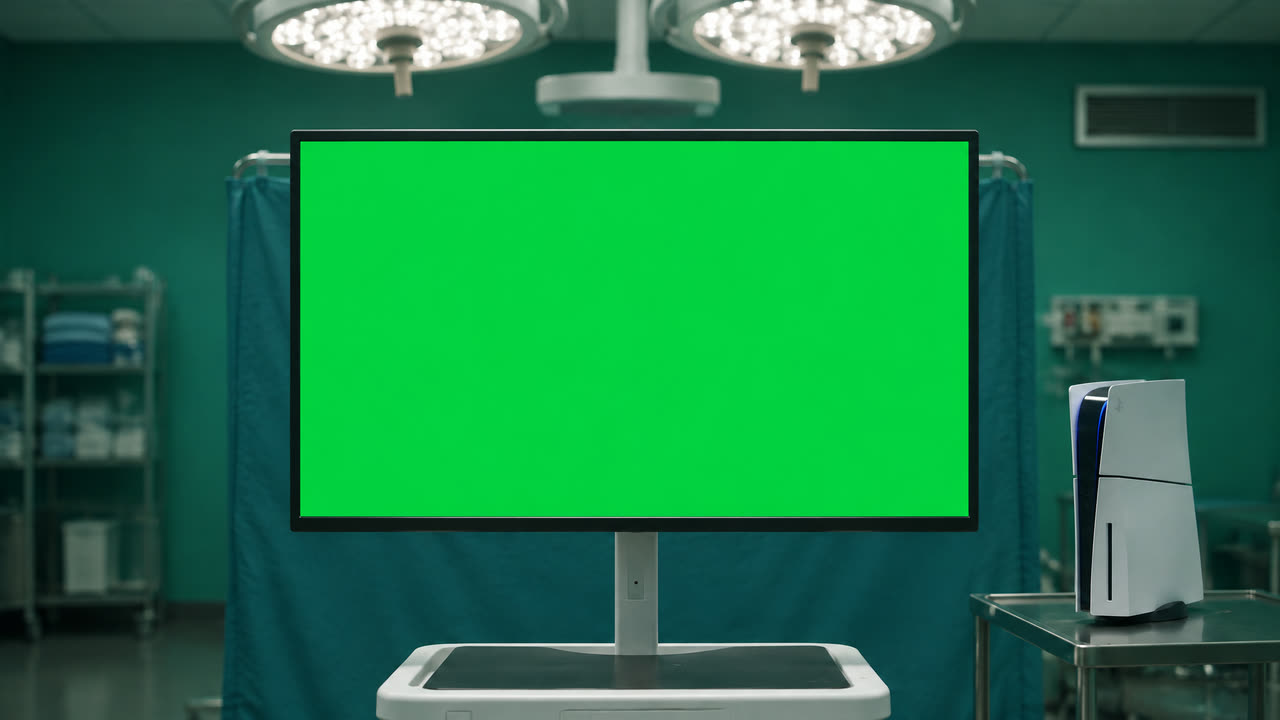
The green-screen still Kling 4.0 push in, gameplay added The green-screen stillHorizontal 16:9 photograph, real cinema-camera photography: a teal operating room, flash-lit realism, cool green colour cast, fine film grain, shallow depth of field. Reference image 1 is a 3D blockout: copy ONLY its camera position, its straight-on angle and the layout of objects, never its grey placeholder look and never the picture on its screen. We stand at the HEAD end of the operating table, beyond the patient's head, at standing eye height, looking straight at the FRONT of the medical display monitor from reference image 2 (thin black bezel on a pole stand on a white rolling cart), perfectly square to the camera, not angled, in sharp focus in the foreground. Its screen shows a flat, evenly lit, pure chroma-key green (#00B140) edge to edge inside the bezel: no picture, no text, no reflections, no glare. Directly behind the monitor, soft and out of focus, is the BACK of the tall raised teal surgical drape screen (the anesthesia screen that stands up at the patient's head): a plain vertical wall of teal fabric hung over a metal bar, seen from the head side, so the patient is completely hidden on the far side of it; no body, no face, no patient visible at all. No patient vitals monitor, no ECG and no other medical screen anywhere in the frame. Above, the round boom surgical lights; beyond, teal walls with a ceiling vent and storage shelving, all soft. To the right of the monitor's cart, the small steel cart with the white PlayStation 5 standing upright, as in reference image 2. No people. Keep the whole monitor and the PS5 inside the central 4:3 area (the middle 75% of the width). The monitor fills about 55% of the frame width, centred, with a wider band of the teal drape screen visible behind and below it.
The push inA very gradual, slow, steady push in on a tripod dolly: the camera moves straight forward toward the monitor at a constant gentle speed, ending slightly closer as in the last frame; no pan, no tilt, no shake, no drift. The monitor stays sharp and its screen stays a flat, evenly lit chroma-key green the whole time with no image, no reflections and no change. The background stays still and clean: no smoke, no haze, no fog, no mist, no particles, nothing drifting through the air. No people. No text. Sound: only the real, diegetic sound of the operating room itself: the low hum of the ventilation and lights and the faint steady beep of a patient monitor off-screen. No music, no score, no added sound effects.
Give Kling the still as the start frame and a 94% crop of it as the end frame, so the camera only pushes in.
06
Add the game graphics and the heart monitor
The generated heart monitor showed three numbers that disagreed, so I covered it with my own screen: one trace and one number, falling from the 40s to 0. The game graphics (the map, the mission text, MISSION PASSED and WASTED) are overlays too. I had Claude Code build them all in Remotion, which makes video from code, and exported each one with a transparent background to lay over the footage.
The generated monitor My screen on top WASTED over the last shot The heart monitor (Claude Code)Build me a patient heart monitor screen in Remotion, to lay over the monitor in my clip [path to clip], 24 fps, the same length as the clip. Layout, dark like a real ICU monitor: a thin header bar with a ward name and the time, one green ECG trace running across the left two thirds on a faint grid, drawn by a sweep line that erases just ahead of itself, and one huge heart-rate number on the right. Nothing else on screen, so nothing can disagree. Story, timed to my clip: the rate holds in the 70s, then from [second] it turns amber with an "HR LOW" banner and falls through the 40s into the 30s, the beats slowing. At [second] it flatlines: the trace goes flat, the number turns red and reads 0, the banner says "ASYSTOLE". Then track it onto the screen: find the four corners of the monitor's display in every frame of my clip and corner-pin the screen onto it. Blur it to match the camera's focus in each shot, add a little glow and grain so it looks filmed, and export a ProRes 4444 file with alpha plus a preview over the clip so I can check it.
The game graphics (Claude Code)Build me the on-screen game graphics for my gameplay clip [path to clip] in Remotion, in the style of an open-world crime game, as a transparent overlay at 24 fps. Use these screenshots of the real game as the reference for every element: [paths]. 1. A minimap in the bottom left that rotates with the player's heading, with a pink route to a pink marker, red while the police chase is on, blue once clear, a floor plan once inside the hospital. 2. Wanted stars in the top right while the police chase is on. 3. A mission line at the bottom with one word in pink: "Get Jason to the hospital", then "Take Jason to the operating room", then "Save Jason". Spoken lines show as white subtitles just above it. 4. Button prompts during the surgery: "REMOVE BULLET", then "STITCH", each with a button icon and a progress ring that fills as it's held. 5. MISSION PASSED in gold at the end. Key every cue to a second in my clip, in one list I can edit, so a re-trim only means changing numbers. Then make a WASTED ending for my last shot: the picture flashes red, drains to grey, then goes black, with "wasted" in the game's style. Export each as ProRes 4444 with alpha, plus a preview over the footage.
Blur your screen to match the rack focus, or it looks pasted on.
What goes wrong
Your character turns into someone from a screenshot.
Tell it not to use the people or vehicles in each screenshot, and give one sheet per character.
The gameplay looks like generic AI.
Lead with real screenshots of the game, never your own generated images.
A previs placeholder shows up as a real object.
Shape it like the real thing, and add 'never render a placeholder box'.
The controller is held upside down.
Add a close-up of hands holding it the right way as its own reference.
The 1080p render doesn't match the draft.
Same prompt, refs and seed still drift. My hook's lines came in late, so check the timing again and move them in the edit.
The monitor's numbers disagree.
Don't re-roll for it. Replace the screen in post.
Make your own
Make the character sheets, the locations and the Seedance 2.5 shots in SwiftCut.
Start creating